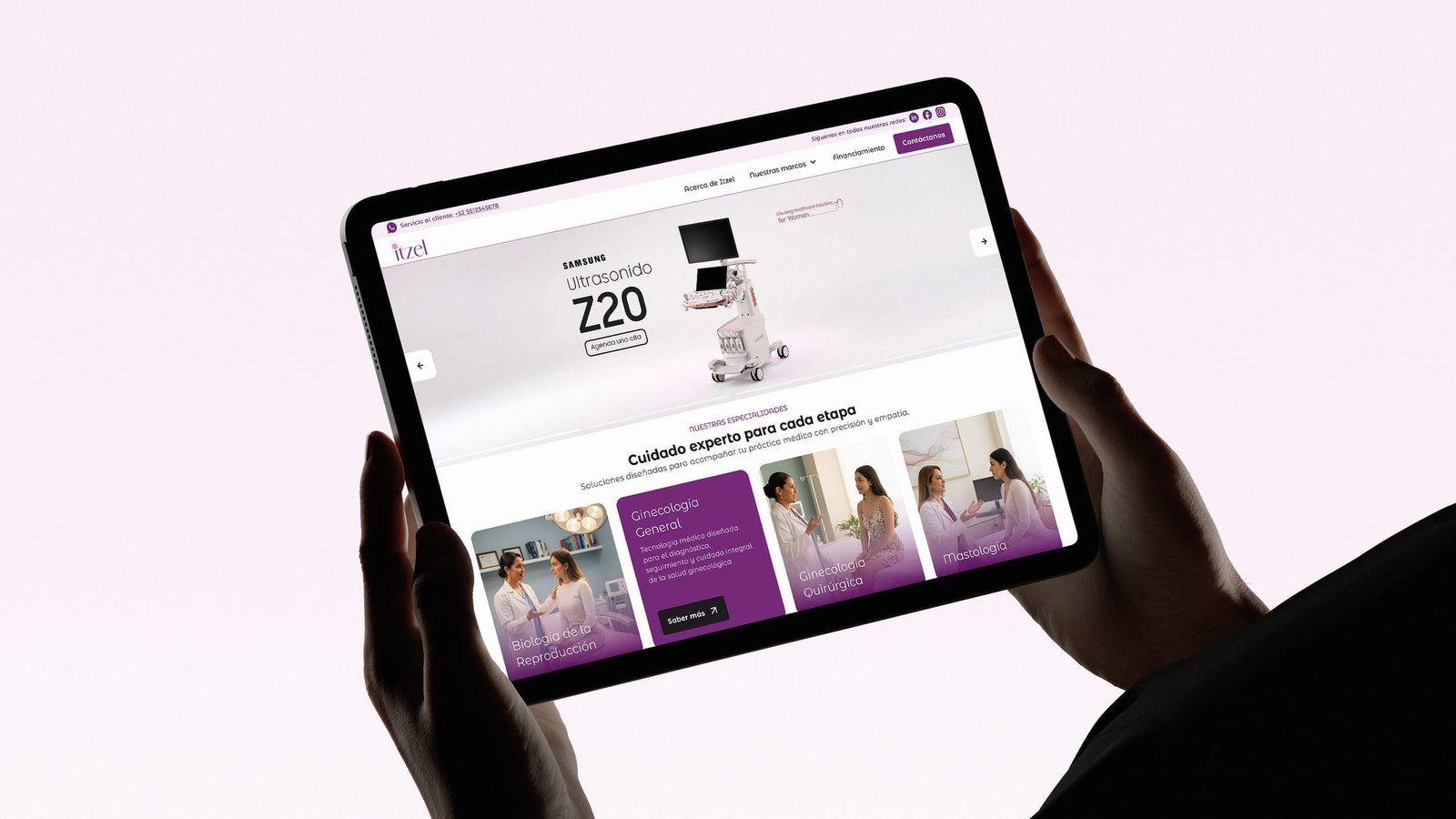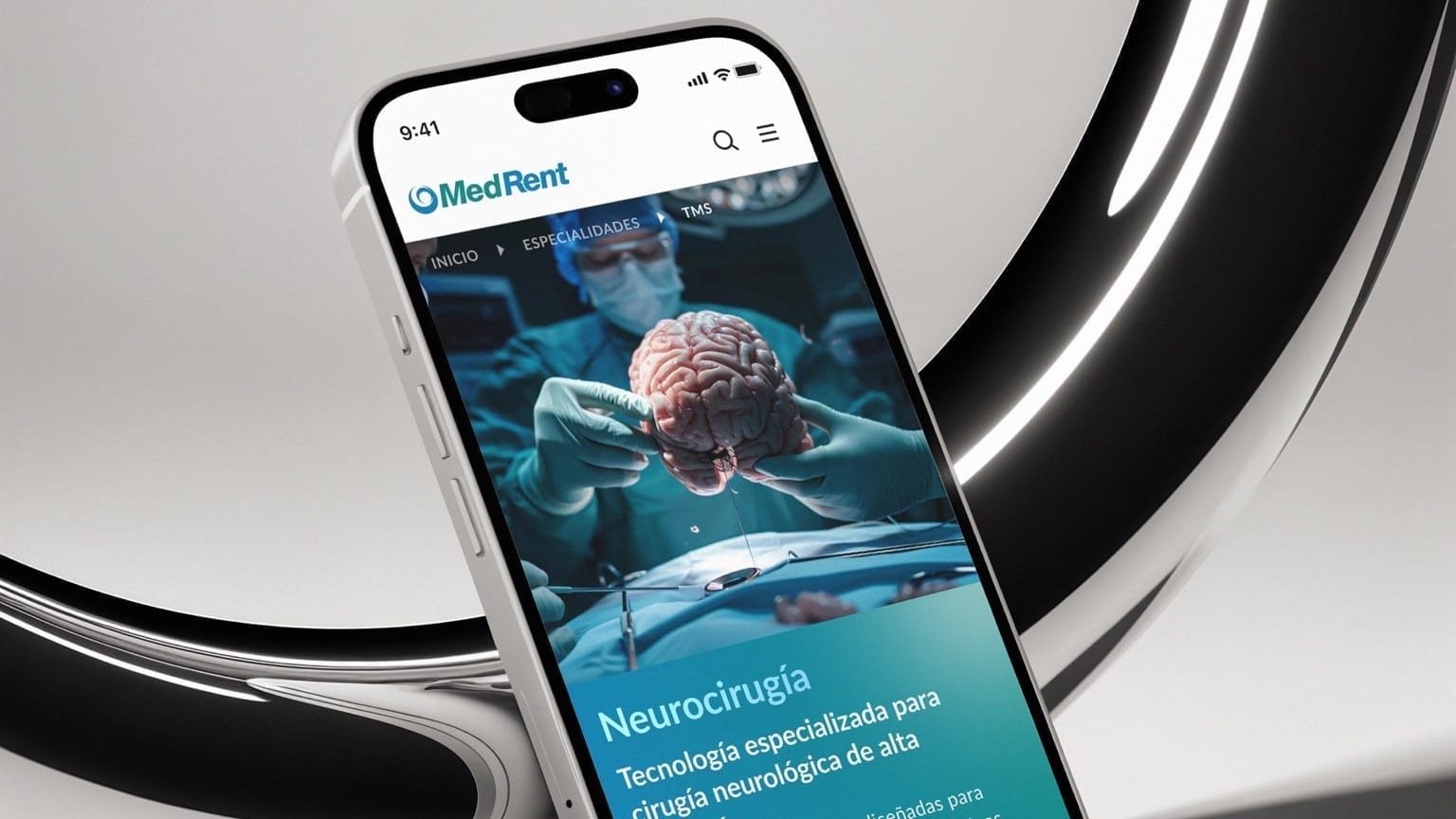
Product Design / UX Architecture / Technical SEO / Healthcare
MedRent — Digital Product Ecosystem
End-to-end redesign of MedRent's digital platform, transforming a complex medical equipment catalog into a scalable B2B ecosystem for clinical discovery, product evaluation, content, financing, and qualified lead generation.
Client
MedRent
Industry
Healthcare / Medical Technology / B2B
Location
Mexico City, Mexico
Year
2025–2026
Time frame
6 months
Budget
$15K USD
Role
Product Designer / UX & UI / Digital Strategy / SEO Architecture
Platforms
Responsive Web / Medical Product Catalog / CMS / Lead Generation
Technology & Tools
Figma / FigJam / Astro / React / Tailwind CSS / Strapi / Google Tag Manager / HubSpot / Vercel
Scope
UX research, information architecture, clinical taxonomy, responsive product design, modular UI system, product discovery, product detail pages, brand architecture, conversion journeys, financing flows, technical SEO, structured content, analytics specification, and developer handoff.
Deliverables
UX Research
Information Architecture
Clinical Taxonomy
Responsive UX/UI Design
Modular UI System
Product Catalog & Filtering
Product Detail Page System
Brand & Specialty Templates
Lead Generation Flows
Financing Journey
SEO Content Architecture
Structured Data & Metadata
Analytics & Conversion Tracking
Developer Handoff
Project overview
MedRent operates in a fundamentally different environment from conventional e-commerce. Physicians, specialists, hospitals, and clinics evaluate highly specialized medical technology through longer, more technical, and higher-value purchasing journeys.
The challenge was not simply to redesign a website or reorganize a catalog, but to create a digital product architecture capable of translating clinical needs into discoverable technology.
I restructured the experience around medical specialties, clinical applications, manufacturers, products, and educational content, supported by a modular system designed to scale with MedRent's portfolio.
The resulting platform connects discovery, product evaluation, expert consultation, financing, content, events, and CRM-driven lead generation—turning the website into an active commercial and knowledge ecosystem.
From Medical Catalog to Clinical Discovery Architecture
MedRent's portfolio connects products with specialties, clinical applications, procedures, manufacturers, and educational content. A conventional category tree would require users to already know which equipment they needed. Instead, I designed the information architecture around the way healthcare professionals approach a clinical need.
Users can discover solutions through multiple paths:
• Specialty → Clinical Application → Product
• Brand → Product
• Catalog → Filters → Product
• Search → Product / Specialty / Application / Content
Search was designed as part of this architecture rather than as a simple keyword field, allowing users to discover relevant results across different content types from a single interaction.
A shared clinical taxonomy became the foundation for navigation, filtering, search, internal linking, product relationships, and SEO.
The result is a clinical discovery system rather than a conventional product directory.
A Modular Product System Built to Scale
MedRent needed a digital system capable of growing without redesigning individual pages every time a new product, consumable, specialty, manufacturer, or clinical application was introduced.
I designed reusable patterns for:
Product cards · Catalogs · Product galleries · Consumables · Technical specifications · Benefits · FAQs · Related products · Brand modules · Conversion components
A shared visual system establishes consistent typography, spacing, interaction patterns, tonal palettes, states, and component behavior across desktop and mobile.
The production platform translates these patterns into an Astro, React, Tailwind CSS, and Strapi architecture where structured content can evolve independently from presentation.
This creates a scalable product foundation capable of supporting a growing medical catalog while maintaining a consistent experience across different types of equipment and clinical information.
Product Evaluation for High-Consideration Medical Technology
Unlike conventional e-commerce, MedRent is primarily an evaluation environment.
Healthcare professionals often need clinical, technical, compatibility, warranty, financing, and support information before speaking with a specialist.
Product Detail Pages were therefore designed to progressively answer:
What it is → What it solves → Who it is for → Why it matters → Technical evidence → Related solutions → How to acquire it
The PDP system combines product galleries, technical specifications, downloadable documentation, benefits, FAQs, consumables, related products, financing information, and persistent consultation actions.
Rather than forcing every detail into the first viewport, the experience progressively exposes information as users move deeper into their evaluation.
The objective is not immediate checkout.
It is to give users enough information and confidence to move from clinical interest to qualified commercial intent.
Conversion Designed Around the Healthcare Sales Cycle
For MedRent, conversion does not end in checkout.
Physicians, clinics, hospitals, and healthcare organizations may require product guidance, demonstrations, financing, technical clarification, or implementation support before making a decision.
The conversion architecture was therefore designed around increasing levels of intent: Explore → Evaluate → Request guidance → Schedule a demo → Commercial follow-up
Persistent CTAs connect product exploration with high-intent actions such as:
• Request a quote
• Schedule a demo
• Talk to a specialist
• Request personalized advice
Structured forms capture relevant information including medical specialty, organization, location, and contact details before connecting the opportunity with HubSpot. WhatsApp provides a faster path for users who need direct specialist assistance.
Together, these flows extend the platform beyond product discovery into a consultative medical technology acquisition journey.
Brands, Clinical Applications & Content as One Ecosystem
MedRent represents specialized medical technology from multiple global manufacturers.
Rather than presenting manufacturers as a conventional logo directory, I designed brand experiences that connect each partner with its technologies, clinical applications, relevant products, and areas of expertise.
The same structure extends into clinical application pages, product families, specialties, and educational resources.
This creates multiple ways to enter the catalog:
• Manufacturer → Technology → Product
• Specialty → Application → Product
• Content → Clinical topic → Related technology
Brand, product, and clinical content therefore operate as a connected discovery layer rather than independent sections of the website.
The result strengthens MedRent's position not only as a distributor, but as a specialized medical technology partner.
Content, SEO & Discoverability Embedded into the Architecture
Organic acquisition was considered at the architecture level rather than added after the interface was complete. Specialties, clinical applications, manufacturers, products, events, and editorial content form semantically related clusters that create multiple discoverable entry points into the MedRent ecosystem.
The platform supports:
• Semantic URLs
• Metadata
• Breadcrumb navigation
• Schema.org structured data
• Internal linking
• Dynamic sitemaps
• Product and brand landing pages
• Clinical and educational content
• Events
• Machine-readable content structures
The blog extends this architecture into long-form educational discovery, while events connect MedRent's digital presence with workshops, congresses, training, and industry activity.
Search can also surface products, specialties, applications, articles, and events together—connecting information retrieval with commercial discovery.
Google Tag Manager and a structured dataLayer provide a foundation for measuring acquisition context, UTM attribution, engagement, and high-intent interactions such as WhatsApp actions.
SEO, content, and measurement therefore operate as part of the product system itself, not as independent marketing layers.
Product & Business Impact
The redesign transformed MedRent from a conventional corporate catalog into a scalable acquisition, discovery, and product-evaluation ecosystem.
The platform now connects:
Clinical discovery · Product evaluation · Manufacturers · Educational content · Events · Financing · Lead generation · CRM · Analytics · Technical SEO
A shared architecture allows products, specialties, applications, manufacturers, related solutions, and content to coexist within the same digital system.
This reduces dependence on isolated landing pages and creates a foundation where new inventory, campaigns, clinical content, and commercial initiatives can reuse existing structures instead of rebuilding the experience from scratch.
The most important outcome is structural:
MedRent now has a digital platform designed to scale alongside its product portfolio, content strategy, organic visibility, and commercial operation.
Design note
I led product strategy, UX architecture, UX/UI design, the design system, SEO, and conversion strategy, working closely with development to translate the experience into a scalable Astro + Strapi platform.
Acknowledgements
Special thanks to Eder Hernández Avendaño and María de la Paz Medina Guzmán for their collaboration in the development of MedRent. Their contributions across frontend development, Astro + Strapi architecture, CMS, QA, performance, and technical optimization helped bring the product vision into production.